
I have stood in hospital hallways next to spouses frantically searching for insurance information. I have seen adult children locked out of accounts because no one knew passwords or account numbers. I have watched families make decisions in crisis mode that would have been clear with five minutes of preparation. These are not hypothetical scenarios. They happen every day, and they compound grief at moments when people can least afford confusion.
As a firefighter paramedic, I have learned that chaos in emergencies is not random. It follows a pattern: unclear information leads to delayed decisions, delayed decisions lead to problems that cascade, and problems compound stress on people who are already broken.
Document disorganization is one of the easiest problems to fix before it matters.
What You'll Learn
- Why document organization matters
- The 15 essential documents your family needs
- The case for centralized document storage
- How the Legacy Binder system works
- Where to start this week
"The wise store up knowledge." — Proverbs 10:14 (NIV)
Why Document Organization Matters
In emergencies, time is currency. Every minute spent hunting for a birth certificate or insurance policy is a minute your family cannot act. Every password you failed to write down is time lost to frustration and growing panic.
I have reviewed the scenes after sudden illness, after accidents, after death. In every single one, I have noticed the same pattern. Families with organized documents move forward. Families without them get stuck.
When documents are scattered, your spouse spends weeks searching through files instead of grieving. Your adult children cannot access bank accounts. Medical decisions get delayed because no one can find healthcare directives. Insurance claims are filed late. Bills go unpaid.
But when documents are organized and accessible, your family knows exactly what to do. They know where the insurance is. They know the account numbers. They know your wishes. They can act.
This is not about paperwork. This is about leadership. When you organize your documents, you are telling your family, "I prepared for this. You are not alone."
Organized documents save time, prevent costly mistakes, and give your family clarity when they need it most.
The 15 Essential Documents Your Family Needs
After twenty years in emergency response, I have seen families destroy themselves trying to find documents they needed immediately. These are the fifteen categories that matter.
Documents of Identity
Start with the fundamentals: birth certificates, marriage certificates, divorce decrees if applicable. These documents establish who you are and who your family members are. They are required for almost everything that comes next.
Add Social Security cards, passports, and driver's licenses. Include education records, professional licenses, and any military service documents. Your family needs to know how to prove your identity and their own.
Medical and Health Documents
Gather your insurance cards for health, life, disability, and any specialized coverage. Equally important are advance medical directives and HIPAA authorizations. These are the documents that give your family the legal right to access your medical information and make decisions on your behalf.
List your medications, allergies, and chronic conditions. Include contact information for your doctors. In an emergency, this information moves directly to paramedics or hospital staff.
Financial and Property Documents
Bank account numbers and statements. Investment portfolios. Retirement accounts like 401(k)s and IRAs. Mortgage documents. Car titles. Property deeds. These documents show what your family owns and what they owe.
Include insurance policies for home, auto, and personal property. These protect your family's assets financially.
Planning and Instructions
Wills and trusts outline how your assets transfer after you die and who cares for minor children. Powers of attorney give someone the authority to make decisions if you become incapacitated.
Create a document listing all your debts, creditors, and payment schedules. Your family needs to know what bills need to be paid and from where.
Emergency Information
Write down emergency contacts. Medical providers. Lawyers. Financial advisors. The neighbor who has the spare key. Meeting places for your family if you cannot reach them. This information should be quick to find and easy to understand.
This week, gather these documents into one pile: birth certificates, marriage certificates, wills, insurance policies, bank statements, and medication lists. These six form your foundation.
Centralized Document Storage
Scattered documents equal scattered decisions. You cannot manage what you cannot find.
The problem in most homes is that vital information lives in multiple places. A will is in a desk drawer. Insurance papers are in a filing cabinet. Passwords are in an app. Bank statements are in email. Healthcare directives are somewhere. Medical records are at the doctor's office. By the time someone needs this information, it has become an Easter egg hunt.
I have trained as a firefighter to work with systems because systems prevent failure. Your family deserves the same protection.
Choose a centralized location, either physical or digital. A physical Legacy Binder with tab dividers keeps documents organized and accessible. A digital backup in cloud storage protects against fire, flood, or theft. Best practice is both.
Physical storage means your family can flip through documents at home during a planning discussion. Digital backup means your documents exist even if your house burns down. This dual approach gives you redundancy and confidence.
The system does not need to be perfect. It needs to be clear. When your family opens it, they should immediately understand where to find what they need.
Progress beats perfection. Start with your most critical documents. Add others as you have time. An 80 percent organized binder beats a perfect one that does not exist.
The Legacy Binder System
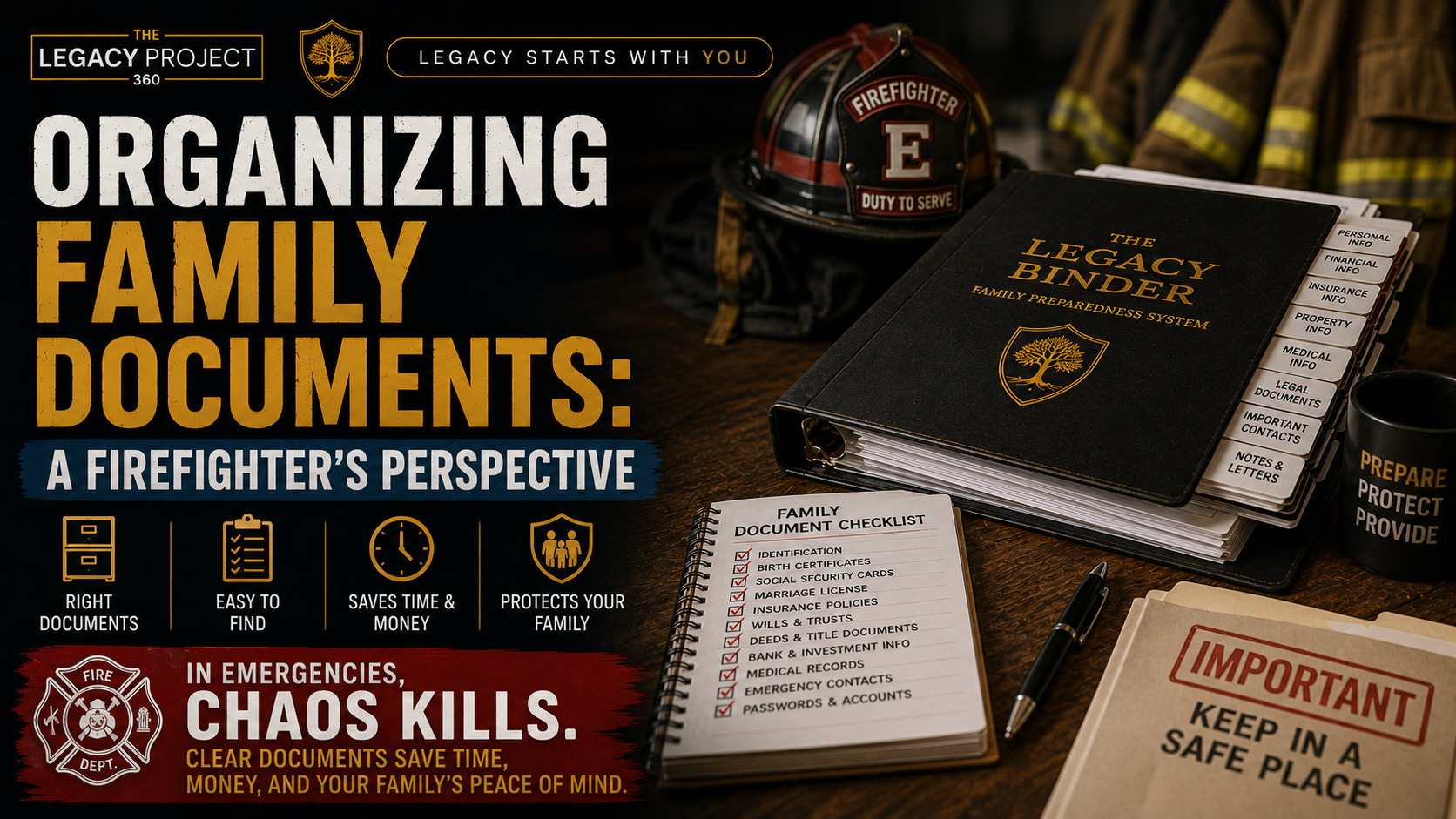
After years of watching families scramble, I designed a simple framework. The Legacy Binder brings everything into one place with clear sections.
Each section has a purpose. Personal identification documents go here. Healthcare documents go here. Financial documents go here. Legal documents go here. Emergency contacts go here. This organization removes the guesswork.
The system is flexible. You can build a physical binder with document dividers and pocket folders. You can build a digital version with cloud folders and encrypted storage. You can do both. The framework stays the same.
The real power of the Legacy Binder is that it removes decision-making from the moment of crisis. Your family does not have to guess what documents they need or where to find them. You have already answered those questions.
For less than the cost of a family meal, you can secure your family's legacy with the Legacy Binder Family Preparedness System.
Do not store critical documents in only one place. A fire, flood, or theft could destroy everything. Keep copies both physically and digitally.
Where to Go From Here
Document organization is not glamorous. It is not exciting. But it is one of the most loving things you can do for your family.
You do not need to complete this overnight. This week, gather your most critical documents. Next week, organize them. The week after, create backups. Steady progress is all you need.
When you are done, sit down with your spouse or adult children. Show them what you have organized. Tell them where everything is. Watch the relief on their faces when they understand you have prepared for this.
That is what leadership looks like.
Choose one day this week to create your first Legacy Binder, physical or digital. Gather documents for just three categories: identification, insurance, and medical information. Everything else follows from there.