
I sat with a family recently whose worst day came without warning. They told me afterward, "We talked about being ready. We meant to organize. We just never did." That statement haunts me because I hear it constantly. Not from people who are careless. From people who care deeply but got stuck somewhere between intention and action.
The barrier is not usually laziness. It is paralysis dressed up as perfectionism.
What You'll Learn
Why perfection is the enemy of preparedness
How to break down overwhelming tasks into manageable steps
What denial and myths are really costing you
How to use simple tools to lower the entry barrier
Why imperfect action beats perfect plans
How to start this week without waiting to feel ready
"Do not despise these small beginnings, for the Lord rejoices to see the work begin." — Zechariah 4:10 (NLT)
The Perfection Trap
Here is what stops most families. They believe preparedness requires a massive, all-or-nothing effort. They imagine overhauling the entire house, buying every piece of gear, creating elaborate plans. That mental image is so overwhelming that they do nothing.
Fear of imperfection paralyzes them. They think if it is not done perfectly, it is worthless. So they avoid starting altogether.
But here is what I have learned as a firefighter. Imperfect preparation beats perfect inaction every single time.
A simple plan you use beats a perfect plan you never finish. Every time.
Preparedness does not require perfection. It requires progress. Small, consistent steps compound over time into real resilience.
Breaking Down Overwhelm Into Manageable Steps
Overwhelm is not a lack of ability. It is a lack of sequence. When you understand the right order of steps, you move forward with confidence instead of paralysis.
Most families start in the wrong place. They try to do everything at once. Bills, documents, emergency kits, medical records, financial plans. The mental load becomes too much, so they shut down.
Instead, identify what disrupts your life fastest. For most families, that is a power outage, a medical emergency, or a sudden need to evacuate. Start there. Not everywhere. There.
Organize one category. Have one conversation. Take one action. That first small win builds confidence, which makes the second step feel less impossible, which leads to a third step, and so on.
Sequence matters more than perfection. In firefighting, we prioritize life safety first, stabilization second, property last. Apply the same logic at home. Start with what keeps your family alive and safe. Everything else follows.
This week, pick one thing to organize. Just one. Not your finances, not your medical records, not your emergency supplies. One. Document it, organize it, tell your spouse where it is. That is your foundation.
Addressing Denial and Financial Myths
Many families avoid preparedness because they are in denial. Life happens to other people. Emergencies happen to other families. We are different.
But we are not different. The only difference between prepared families and unprepared families is that prepared families started before life forced them to.
Another barrier is financial. Many people believe preparedness costs a fortune. You have to buy all the gear. You have to outfit the whole house. So they do nothing because they cannot do everything.
But here is the truth. Planning costs nothing. Conversations cost nothing. Organizing documents into a folder costs nothing. You do not need expensive equipment to start. You need intention.
Start with free actions. Talk about what your family needs. Gather documents. Create a simple plan. Write down emergency contacts. These cost nothing and solve enormous problems when crisis arrives.
Do not let the myth that preparedness is expensive keep you from starting. The most valuable preparation is often the cheapest. A conversation. A written plan. Organized documents.
Using Tools to Lower the Barrier
One of the reasons families fail at preparedness is that they do not have a clear starting point. No framework. Just a vague sense they should be doing something.
Tools like the Legacy Binder change that. They provide a tangible starting point. Instead of staring at a blank page wondering what to do, you have a structure. Sections. Checklists. A clear path.
This is powerful because it removes the decision-making burden. You do not have to figure out what goes where. The system already tells you. You just follow it.
Using a structured tool also makes preparedness less intimidating for families with children. Kids can help fill out checklists. Everyone contributes to the plan. It becomes a family project instead of one person's burden.
Most importantly, tools give you permission to start imperfectly. The Legacy Binder does not require you to have everything organized perfectly before you begin. You start with what you have and add to it over time. That is exactly how real resilience builds.
Taking Imperfect Action
Here is the secret that prepared families understand. You do not need to feel ready to start.
Taking imperfect action now beats waiting for perfect readiness that never comes. One small step creates momentum. Momentum creates clarity. Clarity builds confidence.
I tell families this constantly. Movement creates clarity. Sitting still in fear creates nothing.
Start with one simple task. Organize a folder. Have a conversation. Gather three documents. These small actions seem insignificant until the day you need them. Then they become everything.
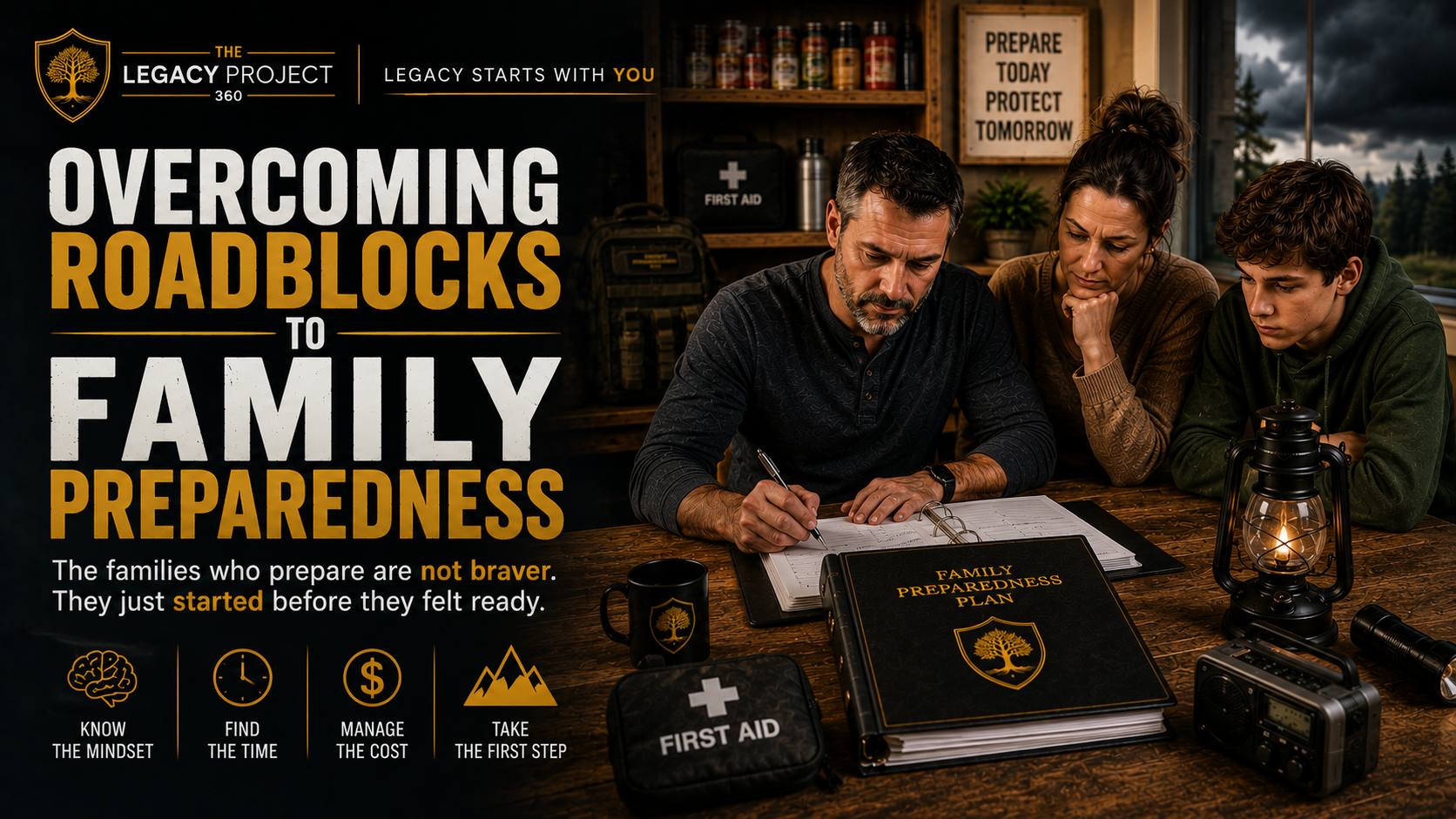
The families who build real resilience are not special. They are not braver. They are not wealthier. They simply started. They took that first imperfect step instead of waiting for everything to line up perfectly.
Preparedness is not a one-time event. It is a series of small actions that compound over time. Every single step matters. The first step matters most because it breaks the inertia.
The families who prepare are not different from you. They just started imperfectly instead of waiting to feel ready.
Where to Go From Here
You have a choice. You can wait for the right time, the perfect moment, the complete plan. Or you can start this week with one imperfect action.
You already know which choice the prepared families made.
Your family does not need you to be a prepper. They need you to be intentional. They need you to take one small step this week that says, "I am thinking about what happens next."
That is all. One step. This week.
The rest will follow from there.
Identify one barrier that has stopped you from preparing. Is it overwhelm? Cost? Perfection? Write it down. Then write down one small action that sidesteps that barrier. Do that action this week. Everything else builds from that single step.