

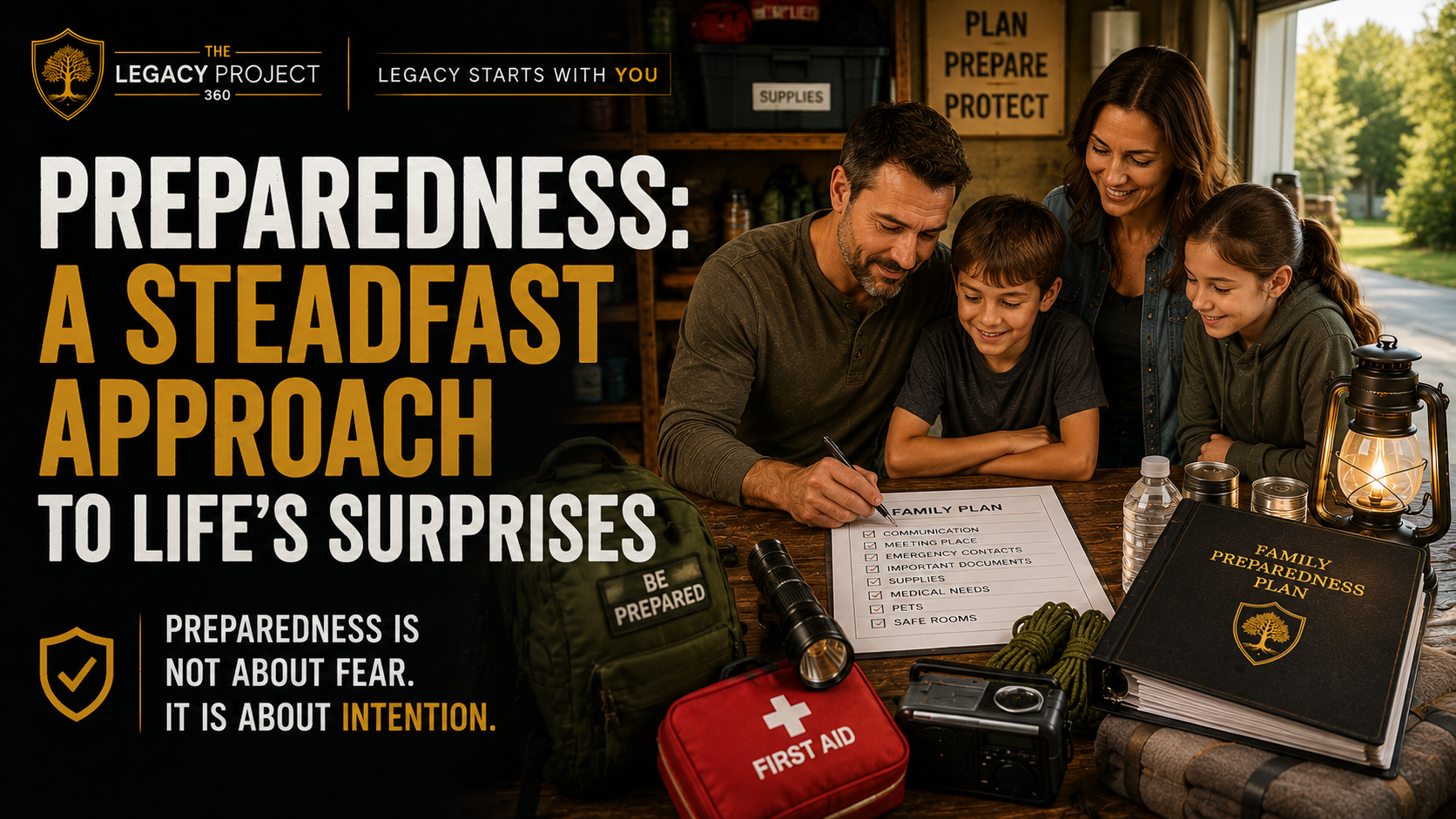
Most people picture emergency preparedness as one of two things. Either a calm, organized family with a solid plan, or a basement full of supplies and a person convinced the world is ending next Tuesday.
The truth is closer to the first one, and it looks far less dramatic than most people expect.
After two decades as a firefighter and paramedic, the pattern is unmistakable. The families who handle emergencies well are not the ones with the most gear. They are the ones with clear plans, practiced roles, and a mindset built for calm decision-making.
Preparedness is not about fear. It is about intention.
What You'll Learn
The difference between real preparedness and paranoia
Why calmness improves decision-making during crises
How to make preparedness a normal part of daily life
Where quiet confidence actually comes from
How community relationships multiply your family's resilience
"For God has not given us a spirit of fear, but of power and of love and of a sound mind." — 2 Timothy 1:7 (NKJV)
Preparedness and Paranoia Are Opposites
Paranoia fixates on everything that could go wrong. Real preparedness focuses on what you can control.
Fear-driven preparation tends to overreact. It fixates on extreme scenarios, creates anxiety, and leads to stockpiling without structure. When an actual emergency arrives, fear-driven families freeze because they planned for everything except the most likely thing.
Intentional preparedness works differently. It accepts that emergencies happen, focuses on realistic scenarios, and builds simple systems your family can execute under stress. It is not about controlling every possible outcome. It is about being ready for the most probable ones.
The most prepared people you will ever meet are also the calmest. That is not a coincidence. Calm comes from clarity. Clarity comes from having a plan you have actually practiced.
Preparedness is intentional and focused on realistic scenarios. Paranoia is fear-driven and creates anxiety without producing useful action.
Why Calmness Matters More Than You Think
Anxiety in a crisis almost always comes from the same source. Not knowing what to do next. When there is no plan, the mind races. Decisions become frantic. Actions get rushed or skipped.
Preparedness solves this problem before the emergency starts. When your family knows who does what, where to go, and what to grab, the mental load drops dramatically. You are not figuring anything out in the moment. You are executing a plan you already made.
Three things clear plans do under pressure:
Defined roles prevent confusion and duplicated effort
Rehearsed steps replace in-the-moment thinking with automatic action
Prioritized actions keep everyone focused on what actually matters first
Research consistently shows that calm individuals perform better under stress because they filter out distractions and focus on what is in front of them. Preparedness creates that calm by eliminating ambiguity before chaos arrives.
Making Preparedness a Normal Part of Life
The families who handle emergencies best are not the ones who had a big preparedness weekend once. They are the ones who made small, consistent habits part of their normal routine.
Keep Plans Simple and Flexible
Complex plans break under stress. Simple ones hold. Your family emergency plan should fit on one page. It should answer three questions every household member can recite without looking anything up:
What do we do first?
Who handles what?
Where do we meet if separated?
That is your foundation. Build from there.
Revisit and Practice Regularly
Review your plan twice a year. Walk through a power outage scenario. Update your emergency contact list. Rotate your supplies. These check-ins take thirty minutes and keep your plan relevant and your family familiar with it.
Focus on Skills Over Stuff
Basic first aid, knowing how to shut off your home's water and gas, and knowing how to operate every piece of equipment you own matter more than the equipment itself. An unopened first aid kit is not preparedness. Knowing how to use what is in it is.
Make It Feel Boring
When preparedness feels routine and uneventful, that is the goal. Families who have built these habits report feeling less anxious, not more, because the work is already done. The calm you feel on a normal Tuesday is exactly the calm you want to carry into an emergency.
Schedule one family meeting this month to review your emergency plan. Update it if anything has changed. Then schedule a practice drill for two months from now. This simple rhythm keeps your family prepared without requiring constant effort.
Where Does Quiet Confidence Come From
Real confidence in a crisis is quiet. It does not announce itself. It shows up in how calmly someone moves, how clearly they communicate, and how quickly they make decisions when everyone else is still catching up.
That confidence does not come from owning the right gear. It comes from three things: clarity about what to do, practice doing it, and trust that the people around you know their roles.
Prepared families do not need to prove their readiness. They have already done the work. When something happens, that work shows up without fanfare. The plan runs. People move. The crisis gets smaller.
Community multiplies this effect. When your neighbors know their roles, when your church group has a plan, when your street has people who look out for each other, your individual preparation multiplies. Shared readiness is more resilient than isolated readiness every single time.
Preparedness without community connection creates isolated families. The strongest families prepare individually and practice together.
Common Questions About Real Preparedness
What is the difference between being prepared and being paranoid?
Preparedness is intentional and focused on realistic scenarios you can actually plan for. Paranoia is fear-driven and focused on worst-case extremes that create anxiety without producing useful action. If your preparedness efforts make your family calmer and more organized, you are on the right track.
How simple should a family emergency plan actually be?
Simple enough that every member of your household can recall it under stress without looking at anything. One meeting spot. Clear roles. A basic supply list. A communication plan. If your plan takes more than one page to explain, it is too complex.
How do I build calmness under pressure if I am naturally anxious?
Practice is the most direct path. Walk through your emergency plan out loud with your family. Run simple drills. Familiarity reduces anxiety because it replaces uncertainty with a known response. Three slow deep breaths before acting is also a proven technique for activating calm under stress.
How do I get my community involved in preparedness?
Start with your immediate neighbors. Exchange phone numbers. Have a brief conversation about what you would each do during a power outage or evacuation. Most people are more open to this than you expect.
Where to Go From Here
Preparedness that works is not dramatic. It is a simple plan your family has practiced, a calm mindset you have built deliberately, and relationships with the people around you that you have invested in over time.
Fear does not build any of those things. Intention does.
Start small. Keep it simple. Revisit it regularly. That is what readiness actually looks like.
This week, write your family's one-page emergency plan. Next week, talk through it with your family. The week after, practice one scenario. That three-week rhythm builds real preparedness.