Ninety-two percent of Americans say it matters to talk about end-of-life wishes with their family. Only thirty-two percent have actually had the conversation, according to The Conversation Project's national survey. The gap between those two numbers is where regret lives.
When my crew responds to a sudden death, the family rarely knows where the will is. They do not know the bank PIN. They cannot find the life insurance policy. They have no idea what Dad wanted at the funeral. They are grieving and searching at the same time. The end-of-life family conversation that would have prevented all of it never happened.
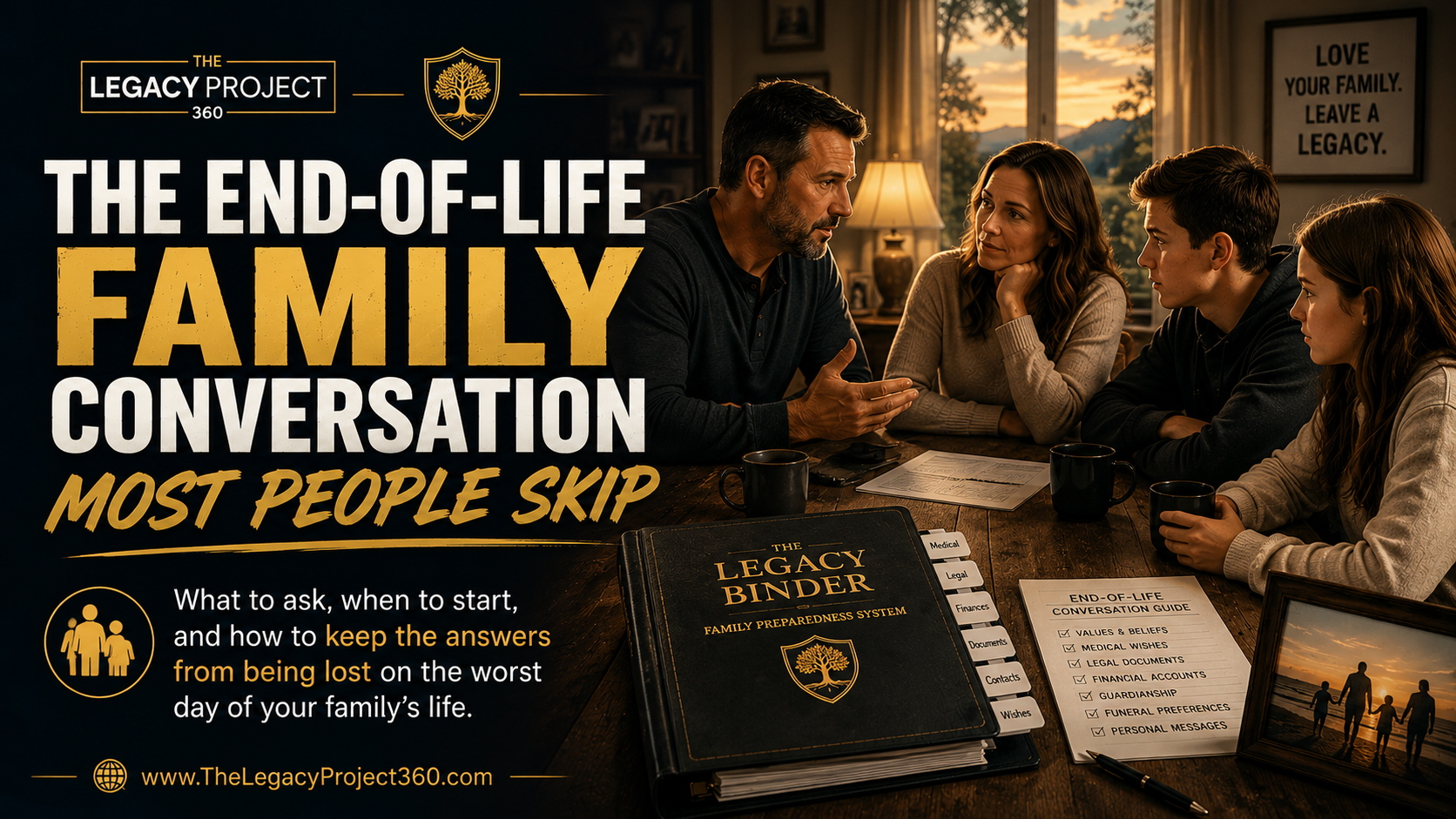
This post is about that conversation. The one your family keeps pushing off because it feels morbid. The one you will wish you had if something happens before you do. Read to the end and you will know what to talk about, when to start, and how to make sure the answers outlast the conversation.
What You'll Learn
Why Most Families Skip the End-of-Life Conversation
What the Conversation Should Actually Cover
How to Start the Conversation Without Drama
How to Document What You Discussed So It Lasts
Frequently Asked Questions
Why Most Families Skip the End-of-Life Conversation
Three reasons keep families silent. None of them are good ones.
First, it feels like jinxing it. People believe somewhere in the back of their mind that talking about death invites it. Doctors and chaplains have heard this for centuries. Death does not work on superstition. Pretending you are immortal does not buy you another decade.
Second, no one wants to upset their parents or kids. Talking about funerals around the dinner table feels harsh. So families wait for the right time. The right time never comes. Then the wrong time arrives without warning.
Third, no one knows what to ask. The conversation feels too big to start. Where do you even begin? Health care wishes? Money? The funeral? The dog?
Here is what I have seen on the job. Families who never talked end up arguing in the hospital hallway about whether to disconnect a ventilator. Siblings who never discussed money end up suing each other over a house. Adult children who never asked their parents what they wanted end up guessing for the rest of their lives.
The Caring.com 2024 Wills and Estate Planning Survey found 68 percent of American adults still have no will. Most of those people are not lazy. They are stuck on the conversation that has to happen before the will gets written.
What the Conversation Should Actually Cover
The conversation breaks into four parts. You do not have to cover all four in one sitting. You do have to cover all four eventually.
Health Care Wishes
This is the hardest part for most families and the most common cause of hospital hallway fights. The questions to ask:
If you cannot speak for yourself, who do you want speaking for you?
Do you want to be kept alive on machines if there is no realistic hope of recovery?
Do you want CPR if your heart stops at age 92?
Do you want to die at home or in a hospital if you have the choice?
Are you an organ donor?
The National Institute on Aging recommends every adult have an advance directive on file with their doctor. The conversation comes first. The paperwork comes second.
Financial and Legal Information
If you went to bed tonight and did not wake up, would your family know how to access your accounts? Would they know whether you carried life insurance and through which company?
Cover these items:
Where the will is and who the executor is
Bank accounts, account numbers, and online passwords
Life insurance policies and the contact for each
Retirement accounts and beneficiaries
Outstanding debts and recurring bills
The location of the safe deposit box and the key
Funeral and Final Wishes
Most people have stronger opinions about their funeral than they let on. They simply need someone to ask. Cover these items:
Burial or cremation
Where the remains should rest
Any specific songs, scriptures, or speakers requested
Whether they want a service at all
A budget that feels right to them, not a budget your guilt sets
The National Funeral Directors Association reported the 2023 median cost of a funeral with viewing and burial was about $8,300. Cremation with a service ran around $6,280. A family that has not discussed cost will overspend by thousands trying to do right by someone whose actual wish was something simpler.
Personal Legacy
This is the part most families miss and the part their kids will treasure most. The questions are not about money or paperwork.
What do you want your grandkids to remember about you?
What lessons did your parents teach you that we should pass on?
What stories from your life do we not know yet?
What faith do you want our family to carry forward?
What do you regret most? What are you most proud of?
These questions are the heart of a real legacy. The Legacy Binder Family Preparedness System has a section dedicated to capturing answers in your own words. See thelegacybinder.com for the full framework.
How to Start the Conversation Without Drama
Most people overthink the opening. You do not need a script. You need a doorway.
Pick a Low-Pressure Setting
Do not bring this up in front of the whole family at Thanksgiving. You will get one defensive parent and three uncomfortable cousins. Pick a quieter moment. A car ride. A walk after dinner. Coffee on a Saturday morning.
Use a Real Event as the Doorway
The easiest opener is news. A friend's parent died unexpectedly. A celebrity passed and left no will. A neighbor is in the hospital. Use the event as a starting point.
"Did you hear about the Robinsons? It made me realize we have never talked about what you would want if something happened. I do not want to make it weird, but I would feel better knowing."
That is the whole opening line. Most parents will exhale and say, "I have been meaning to bring this up too."
Ask, Do Not Lecture
This is not your chance to tell your father he should have written a will twenty years ago. This is your chance to listen. Ask a question. Stay quiet. Let them talk.
If they push back, do not push harder. Drop a seed and try again next month. The Conversation Project's research found most families need two or three attempts before the real conversation happens. Patience is part of the plan.
Have It More Than Once
This is not a one-time talk. Health changes. Wishes change. Grandkids arrive. Friends pass. Revisit the conversation every few years. A good rule is once a year, around the same time you change the smoke detector batteries. Both keep your family safer.
The first time I asked my wife to walk me through every account password we own, the answer was longer than most families could give about their final wishes. We laughed about it. Then we wrote it all down. The laugh was the easiest part of the night.
CALLOUT
THE END-OF-LIFE CONVERSATION IS NOT MORBID. IT IS LOVE. IT IS THE GIFT YOUR FAMILY WILL UNWRAP ON THE WORST DAY OF THEIR LIVES AND THANK YOU FOR.
How to Document What You Discussed So It Lasts
A conversation that lives only in someone's memory dies when that person dies. The whole point of having the talk is to capture the answers in writing where the next generation will find them.
Write It Down the Same Week
Memories fade fast. Capture the highlights within a week of the conversation while the answers are still fresh. Use a notebook, a Google Doc, or a dedicated system like the Legacy Binder. The format matters less than the doing.
Keep One Master Document, Not Five
The single biggest mistake families make is scattering this information across email folders, phone notes, sticky drawers, and old filing cabinets. When the moment comes, no one knows where to look.
A printed master document beats a perfect digital file no one knows the password to. Keep the original in a fireproof box. Tell your spouse, your executor, and one other trusted family member where it is. That is your trifecta.
Keep It Current
Schedule a 30-minute review every January. Update phone numbers. Confirm beneficiaries. Add new account passwords. Remove anything no longer relevant. The American Bar Association recommends reviewing estate documents after any major life event such as marriage, divorce, birth, death, move, or a significant financial change.
Tie It to the Rest of Your Preparedness Plan
Your end-of-life conversation belongs in the same place as your emergency plan. Both are about love showing up before you do. The Legacy Binder Family Preparedness System brings preparedness, financial information, and legacy wishes into one organized binder. See thelegacybinder.com for the full system.
Frequently Asked Questions
How do I bring up the end-of-life conversation with my parents?
Use a real event as the doorway. A neighbor's recent death, a story in the news, or a health scare in the family. Open with a soft line like, "I want to make sure I know what you would want if something happened." Ask, listen, and resist the urge to push. Most parents are relieved you brought it up first.
What is the most important question to ask in this conversation?
If you only ask one question, ask, "Who do you want speaking for you if you cannot speak for yourself?" That answer drives medical decisions, legal authority, and family unity in a crisis. Every other answer flows from it.
Should I have this conversation with my spouse or only with my parents?
Both. Spouses leave each other with the same scrambled paperwork aging parents leave their kids. Walk through health wishes, accounts, life insurance, and final wishes with your spouse the same way you would with your parents. The questions are the same.
How often should we revisit the conversation?
Once a year is plenty for most families. Tie it to a specific date so it does not get skipped. Many families pair it with the same weekend they change smoke detector batteries or do their tax prep. After any major life event, do an extra review.
What if my parents refuse to talk about it?
Drop a seed and try again. The Conversation Project's research found most families need more than one attempt before the real conversation happens. Share something about your own wishes first. Modeling the conversation often opens the door faster than asking outright.
Conclusion
The end-of-life conversation is not about death. It is about clarity. It is the difference between a family who grieves with peace and a family who fights in a hospital hallway. Once you have had the talk, the rest of legacy planning becomes paperwork. Pick a quiet moment. Ask one question. Listen. Write down what you learn. Do it again next year. Your family will live with the answers you gather long after you are gone.
Once the conversation has happened, the answers need a home. The Legacy Binder Family Preparedness System gives your family one organized place for medical wishes, account information, legal documents, and personal legacy notes. See the full system at thelegacybinder.com and start building the plan your family will thank you for.
Written by Paul T. Brewer, The Legacy Project 360.